
 Click main image to view in full screen. Unlock all 10 preview images:
Behavior Based Safety – PowerPoint PPTX Template
PowerPoint (PPTX) 54 Slides


BENEFITS OF THIS DOWNLOADABLE POWERPOINT DOCUMENT
- Attractive slides for individuals who want to learn and implement Behavior-Based Safety in their organizations / ready ppt for trainers
- Individuals belong to a different department other than health and safety and want to increase their knowledge about the Behavior-Based Safety Program
- The presentation features high-quality images, graphics, and animations
WORKPLACE SAFETY PPT TEMPLATE DESCRIPTION
Behavior-based safety is a critical aspect of workplace safety that focuses on changing employee behavior to create a safer work environment. The PowerPoint presentation on behavior-based safety is a comprehensive and engaging resource that provides valuable insights into this important topic.
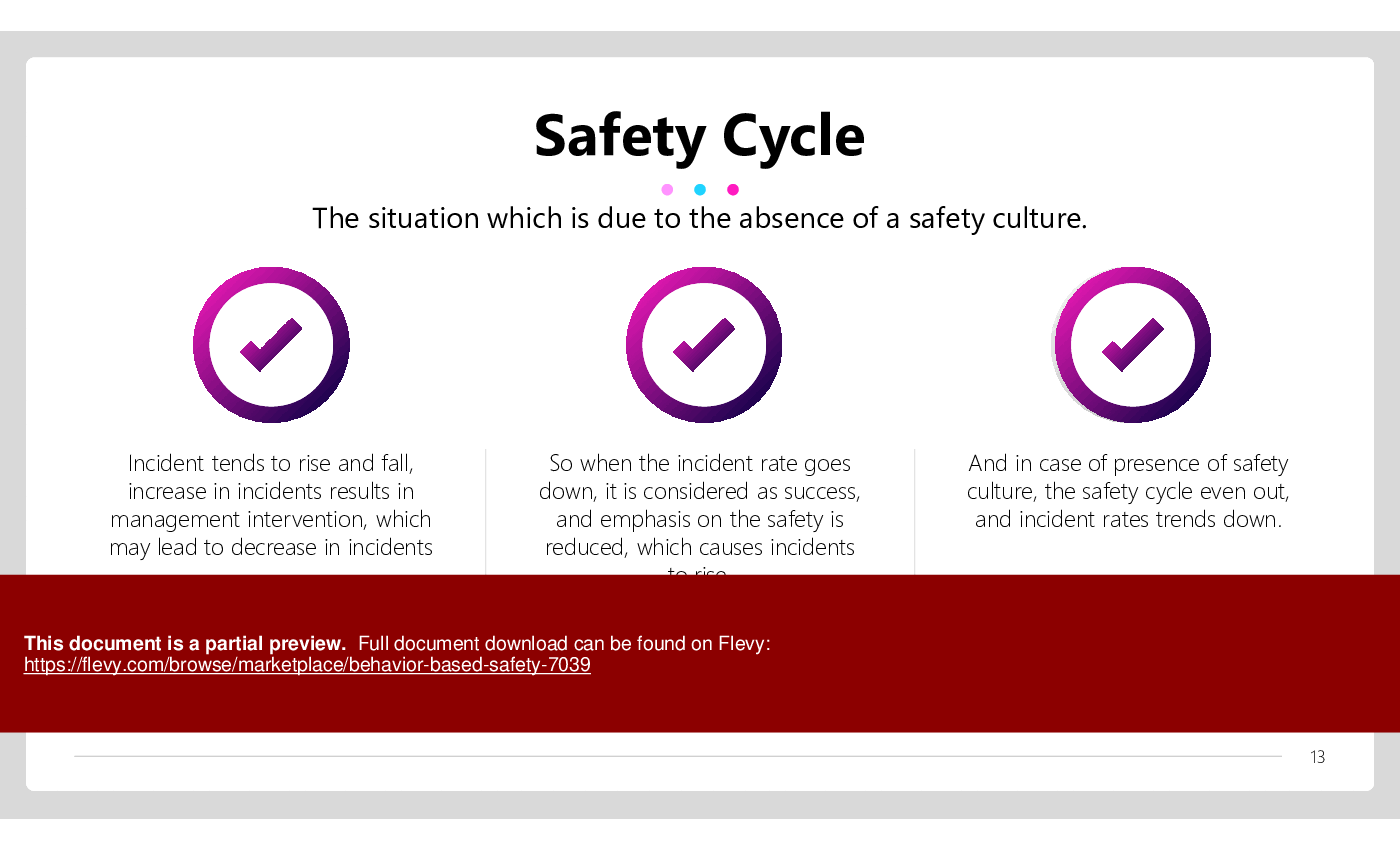
The presentation is designed to educate employees and managers on the various ways in which behavior can influence safety in the workplace. It covers topics such as the ABC model of behavior, the role of positive reinforcement, and the importance of communication and feedback.
What topics are covered in the presentation:
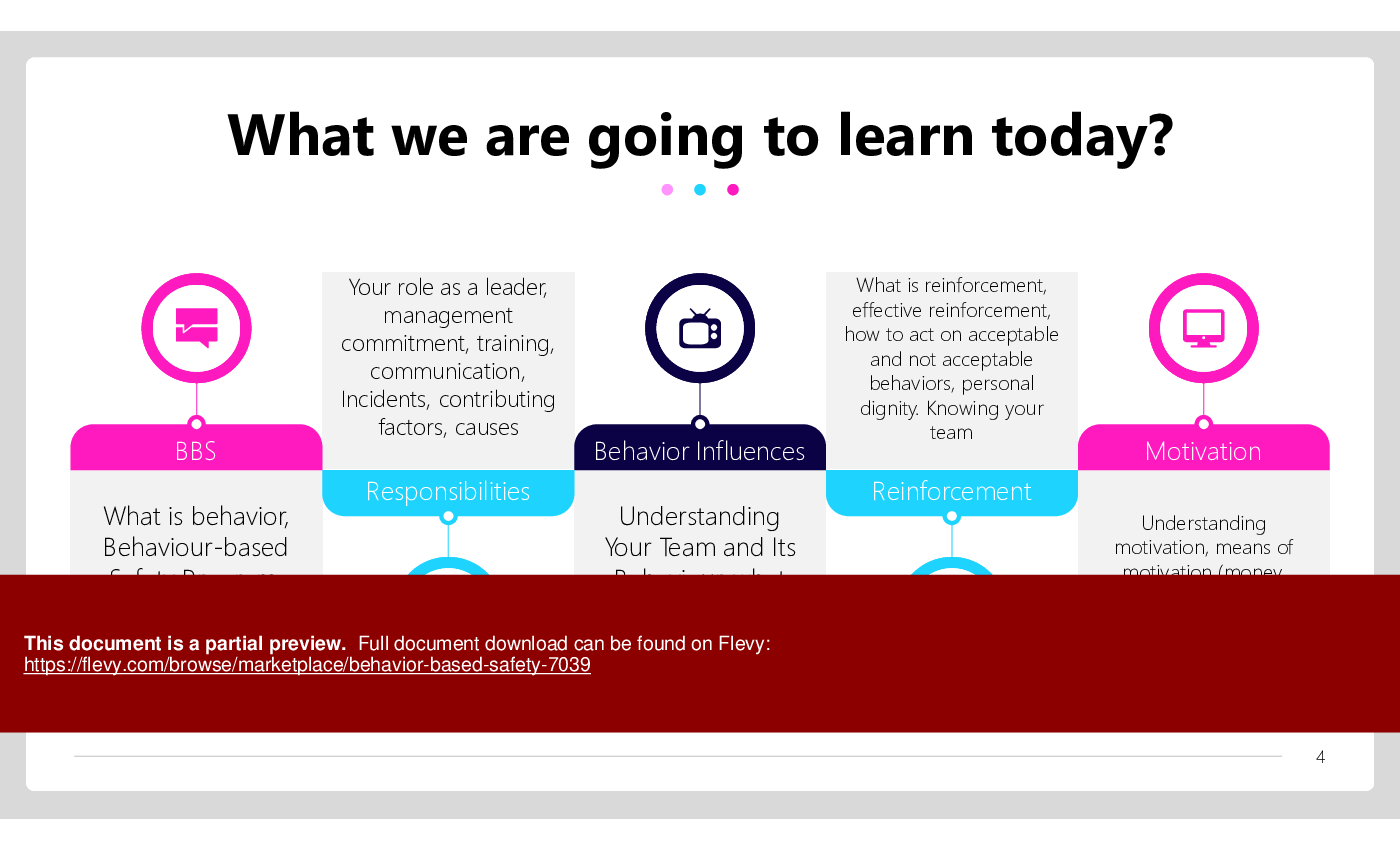
1. Introduction to Behavior-Based Safety and its key terminologies
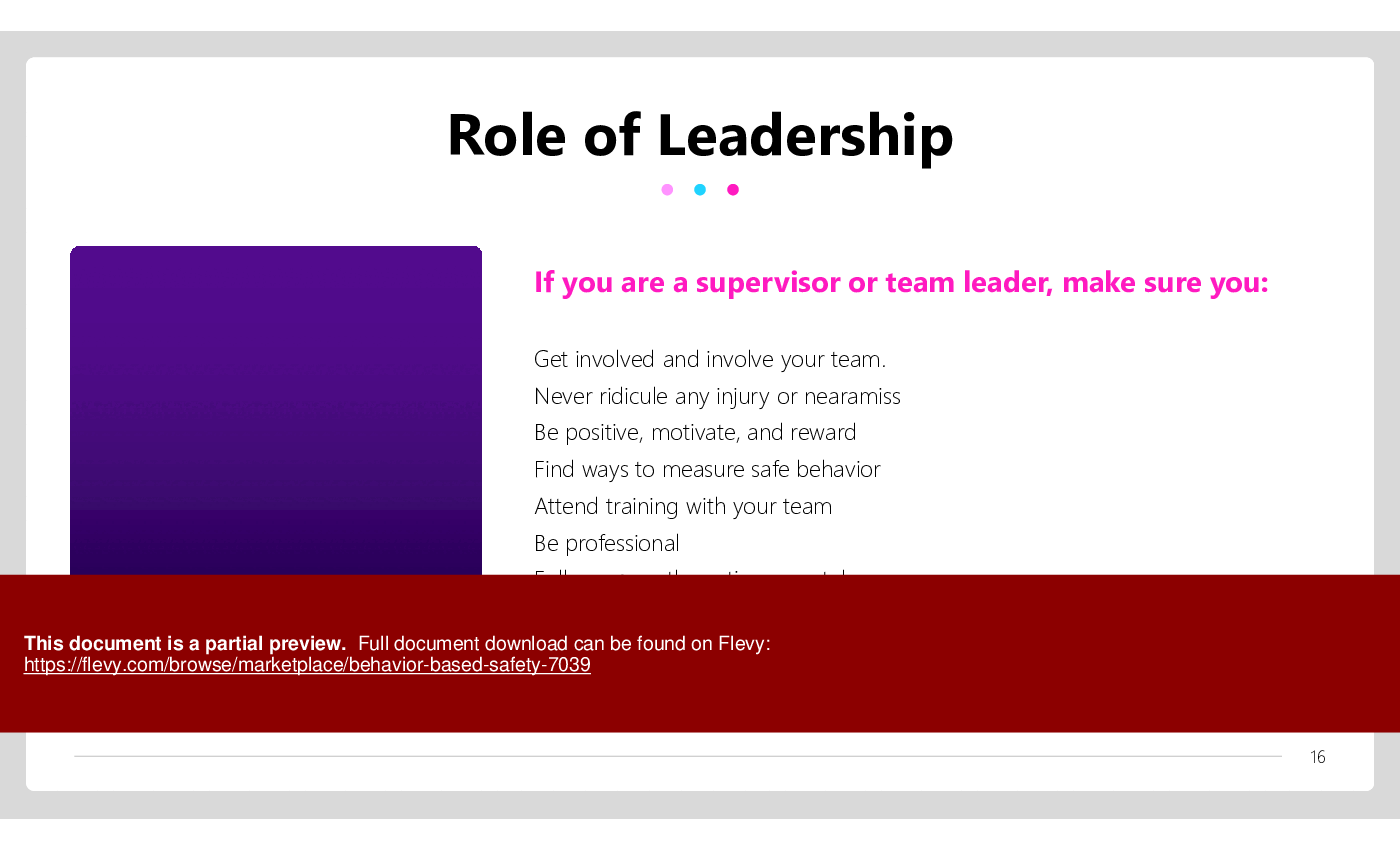
2. Responsibilities of a manager, supervisor or a team leader in implementation of Behavior-Based Safety
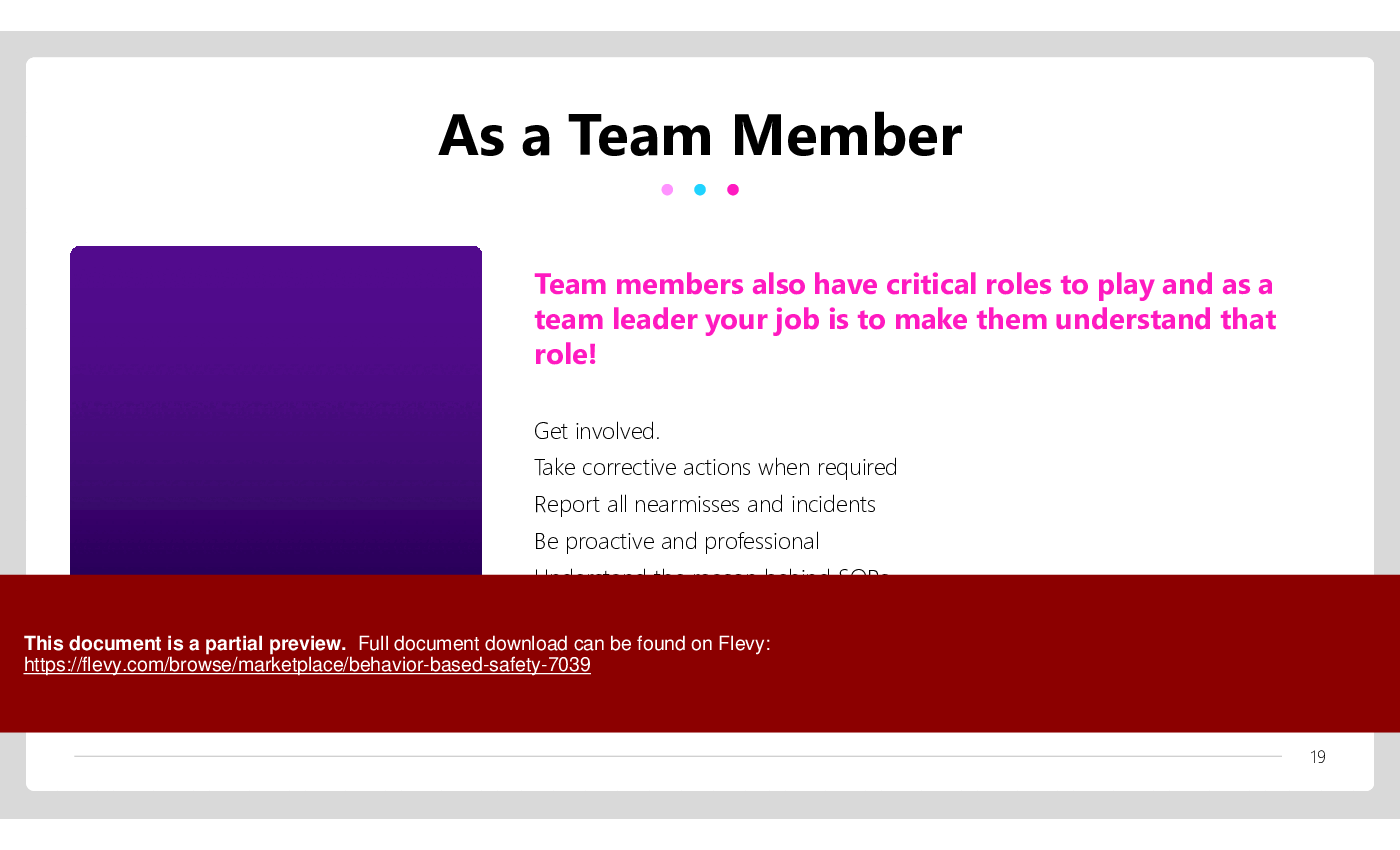
3. Responsibilities in implementation of Behavior-Based Safety when you are part of a team
4. Incidents, types of incidents, contributing factors and causes of incidents
5. What are unsafe conditions, unsafe acts, near-misses and incidents
6. Behavior influences : What factors influences behavior; how to understand your team and their behaviors
7. Procedure and ethics of observations of behaviors
8. Reinforcement: What are they and how to make them effective
9. How to act on acceptable and non-acceptable behaviors; how to maintain personal dignity
10. What are the various means of employee motivation
11. How can we effectively use those techniques to enforce the system of Behavior Based Safety
One of the key strengths of this presentation is its use of powerful visuals that help to reinforce key concepts and keep the audience engaged. The presentation features high-quality images, graphics, and animations that illustrate key points and help to make the content more memorable.
In addition to its visual appeal, the presentation is also highly informative and well-organized. It provides clear and concise explanations of complex concepts, making it easy for employees at all levels to understand and apply the principles of behavior-based safety.
Overall, the PowerPoint presentation on behavior-based safety is an essential resource for any organization that is committed to creating a safer workplace. Its clear, concise, and engaging content will help to educate and motivate employees to adopt safe behaviors and work towards a culture of safety.
Got a question about the product? Email us at support@flevy.com or ask the author directly by using the "Ask the Author a Question" form. If you cannot view the preview above this document description, go here to view the large preview instead.
TOPIC FAQ
What is behavior-based safety and how does the ABC model explain workplace behavior?
Behavior-based safety (BBS) aims to change employee actions to reduce incidents by focusing on observable behaviors. The ABC model explains behavior as Antecedent (what precedes), Behavior (the action), and Consequence (what follows), and the presentation specifically covers the ABC model.How should observations and feedback be conducted under a BBS program?
Effective BBS observations follow documented procedure and ethics: observe behaviors objectively, record without judgment, give timely constructive feedback, and preserve personal dignity when addressing non-acceptable behaviors. The deck includes guidance on observation procedure and ethics.What role does reinforcement play in sustaining safer behaviors?
Reinforcement shapes behavior by linking desirable actions to positive consequences; the presentation describes types of reinforcers, how to apply them consistently, and how to design incentives so they are meaningful and effective. The content covers effective reinforcement techniques.What are common incident types and contributing factors BBS seeks to address?
BBS targets incidents resulting from unsafe acts and unsafe conditions, and seeks to capture near-misses to identify root causes; the presentation outlines incident types, contributing factors, and causes to inform observation and coaching efforts. The material addresses incident types, contributing factors, and causes.What should I look for in a training slide deck to run a BBS workshop?
Choose a deck that explains basic models (ABC), defines roles and responsibilities for managers and teams, provides observation and feedback protocols, and includes visual aids for engagement. Flevy's Behavior Based Safety presentation includes these topics and is organized into a 54-slide PowerPoint.How can off-the-shelf PowerPoint materials impact my rollout timeline and preparation effort?
Ready-made slides reduce content development and standardize messaging for trainers; using a prebuilt deck can shorten preparation time and ensure coverage of core topics like observations, reinforcement, and roles. The Behavior Based Safety file is a 54-slide PowerPoint resource.I need to coach supervisors after a near-miss—what behavior-focused steps should I follow?
After a near-miss, use structured observations to identify the unsafe act or condition, provide factual feedback that preserves dignity, document corrective actions, and apply targeted reinforcement to encourage safer choices; the presentation provides steps for observation and feedback procedures.How can a team leader use BBS techniques to increase employee motivation for safety?
Team leaders can apply positive reinforcement, communicate clear expectations, use regular observation with constructive feedback, and employ various motivational means to build ownership of safety practices; the deck describes different means of employee motivation and how to apply them.Source: Best Practices in Workplace Safety PowerPoint Slides: Behavior Based Safety PowerPoint (PPTX) Presentation Slide Deck, HSE-Q Training International
ABOUT THE AUTHOR

HSE-Q Training International is a professional training and consulting firm specializing in ISO Management Systems, Environmental Management, Occupational Health & Safety, ESG-related compliance, risk management, and operational excellence.
Our team has extensive experience supporting organizations across construction, infrastructure, logistics, manufacturing, healthcare, warehousing, and
... [read more]
Ask the Author a Question
You must be logged in to contact the author.




























